
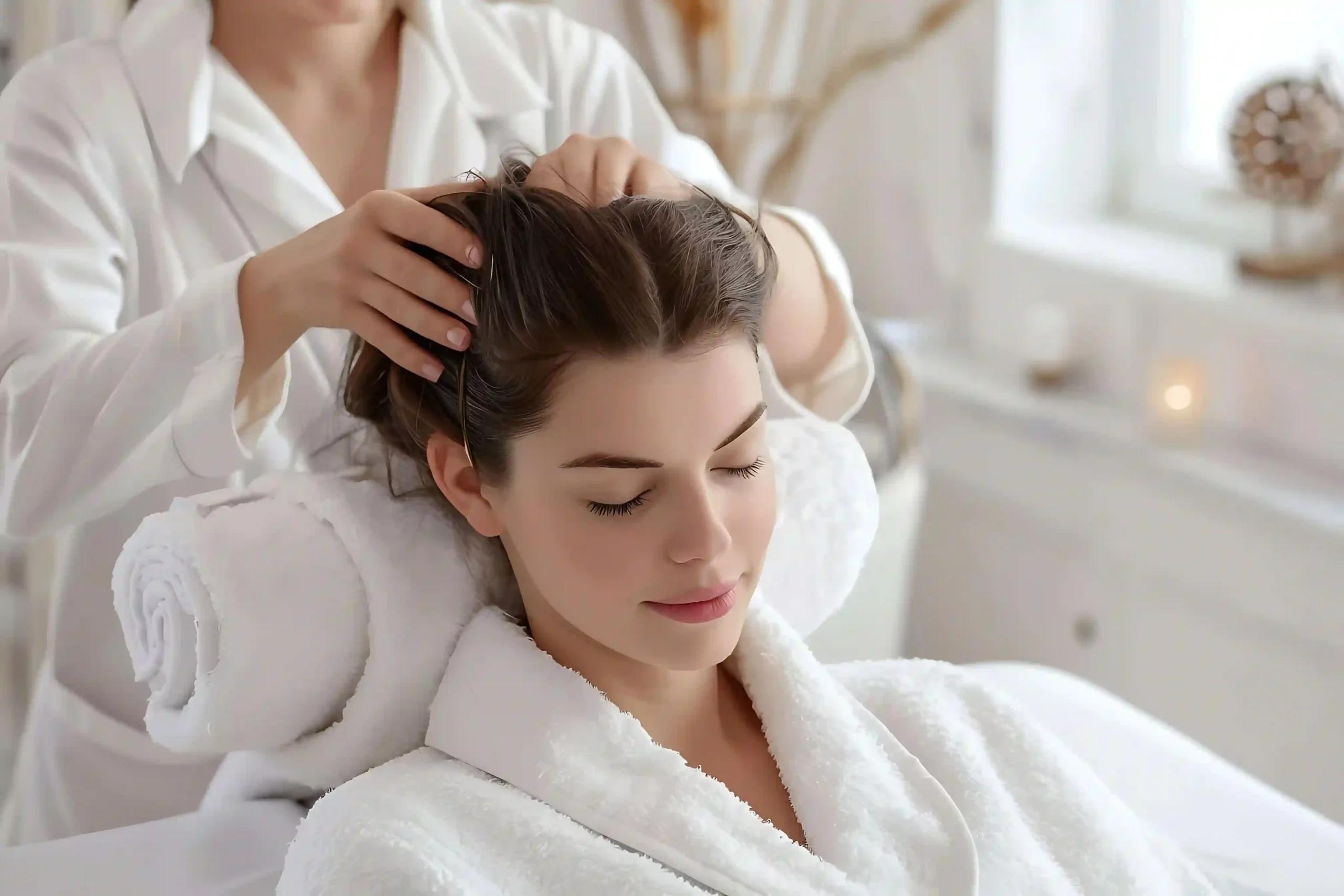
How to Choose the Right Hair Treatment for Your Hair Type
Ever sat in a salon chair, stared at the service menu, and thought, “Okay… but which one is actually right for my hair?” This blog is here to help with how to choose the right hair treatment for your hair type without confusion or guesswork.
Why hair treatments feel confusing
Walk into any salon or beauty store and you’ll see “hydrating,” “bond repair,” “keratin,” “botox,” “smoothing,” “scalp detox” and more, all promising smooth, shiny, perfect hair. Most people end up picking what sounds trendy or expensive, not what their hair truly needs, which is exactly how you get flat roots, frizzy ends, or damage that just keeps coming back.
“Hair doesn’t shout when it’s tired; it quietly dulls and breaks. The right treatment isn’t just beauty – it’s a small reset for everything you’ve put your hair through.”
How to Choose the Right Hair Treatment for Your Hair Type
To really know how to choose the right hair treatment for your hair type, you need three basics: your hair type, your main concern, and how much effort you’ll honestly give to aftercare. Start by checking whether your hair is straight, wavy, curly, or coily and if your scalp feels oily, dry, or normal, because each combo responds better to certain ingredients and salon treatments. Once those are clear, it becomes much easier to ignore half the menu and focus only on treatments that actually suit your hair.
Step 1: Understand your real hair type
- Texture: Straight hair usually gets oily faster and can look flat at the roots, while wavy hair can get puffy in the mids and ends, and curly or coily hair often struggles with dryness and frizz.
- Condition: Look for signs like dry, straw-like ends, breakage, split ends, rough feel, or dull, lifeless color to know whether you need moisture, strength, or scalp help first.
- Porosity: Hair that has been colored, lightened, or chemically treated tends to be more porous, which means it absorbs products quickly but loses moisture fast, so it usually benefits from richer masks and bond-repair formulas.
Step 2: Match treatments to your common concerns
- Dry, rough, or frizzy hair: Deep conditioning rituals, hydrating hair spa sessions, and smoothing masks focus on softening the cuticle and locking in moisture.
- Weak, breaking, or chemically treated hair: Protein or bond-building treatments help support the internal structure of the hair shaft and reduce breakage after color, straightening, or frequent heat styling.
- Oily scalp and dull lengths: Clarifying or detox treatments for the scalp, paired with lighter masks only on mid-lengths and ends, restore freshness without making hair heavy or greasy.
Fine vs thick hair: what actually works
Fine hair gets weighed down easily, so it usually prefers lightweight masks, liquid or spray bond builders, and scalp-focused therapies instead of heavy butter-like creams. Thick or coarse hair, on the other hand, often loves rich cream masks, oil-infused spa rituals, and smoothing treatments that control frizz while keeping the natural body and movement. Curly and coily hair typically needs moisture-first care and curl-friendly treatments that respect the pattern instead of forcing it too flat or too straight.
Why Exxude Styling Lounge feels like a safe place to decide
At Exxude Styling Lounge in Kochi, the team usually starts with a small, honest chat before suggesting anything – how often you color, what tools you use, how you tie your hair, and even how much time you spend on styling at home. This kind of consultation helps avoid mismatches, like giving a heavy smoothening treatment to someone whose main issue is just dryness at the ends, or strong protein to hair that already feels stiff. Many guests appreciate when a stylist explains why a particular hair spa, bond-repair ritual, or anti-frizz treatment suits their hair now, instead of simply recommending the most expensive option on the list.
Step 3: Set clear hair goals before picking a treatment
Try to put your goal into one simple line:
- “I want less frizz and more smoothness.”
- “I want my color to look fresh and glossy for longer.”
- “I want my curls to look defined, not just puffy.”
- “I want my hair to stop breaking every time I comb it.”
For shine and softness, hydrating hair spa rituals and nourishing masks, sometimes paired with steam, can help the cuticle lie flatter and reflect more light. For strength and breakage, bond-repair or protein-based salon treatments protect the inner structure of the strand so hair can handle everyday styling better. For curl definition and bounce, curl-focused treatments and masks that boost moisture and elasticity, instead of only straightening, often give much happier results.
Step 4: Think about maintenance before saying “yes”
Some treatments look like a dream on day one but need proper aftercare – sulphate-free shampoos, weekly masks, minimal heat, and sometimes salon top-ups – to stay nice. If you know you won’t stick to a strict routine or special products, it may be smarter to choose a gentler moisturizing hair spa, a scalp-reset treatment, or a gloss service rather than a very intense, long-lasting smoothening or restructuring process. A simple rule: the more dramatic the “before and after,” the more carefully you have to behave with your hair afterwards.
Step 5: Learn the basics of ingredients (without overthinking)
You don’t need to memorize every chemical name, just understand a few big ideas: humectants and oils help with moisture, proteins support strength, and silicones give slip and shine but can build up if you never use a clarifying shampoo. Public resources such as the hair conditioner article on Wikipedia explain how conditioners reduce friction, improve manageability, and protect hair from surface damage, which is what most salon hair treatments are trying to achieve in different ways. When you’re in the chair, it’s completely okay to ask your stylist, “What does this product actually do for my hair?” and get a clear, simple answer.
Step 6: Sync your home routine with your salon treatment
No salon ritual can survive long if your at-home habits go in the opposite direction—very harsh shampoos, skipping conditioner, daily heat styling without protection, or tying wet hair tightly all slowly undo the benefits. Try to line up your shampoo, conditioner, and finishing products with your most recent treatment, like using hydrating ranges after hair spa, bond-building formulas after color, or gentle, scalp-friendly products after detox or dandruff control sessions. It doesn’t always mean you need luxury products, just ones that are genuinely suited to your hair type and current condition.
Step 7: Know when to see a professional for your scalp and hair
If you notice sudden, intense hair fall, visible scalp patches, constant itching, or redness, it’s better to visit a dermatologist or trichologist before experimenting with powerful salon treatments. Once any medical or scalp issues are addressed, your stylist can then choose milder, supportive hair rituals that work alongside your doctor’s advice so your hair slowly regains strength and shine. For everyday issues like mild dryness, frizz, or dullness, a detailed salon consultation is usually enough to point you toward the right option.
Final thoughts
Choosing the right hair treatment isn’t about trying everything on the menu; it’s about listening to what your hair is already telling you through signs like dryness, breakage, frizz, or flatness. When you know your hair type, your main concern, and how much care you’re willing to continue at home, you can say yes to treatments that truly fit – and calmly skip the ones that don’t.
Ready to treat your hair the right way?
If you’re searching for a Hair Salon in Kochi and you’re tired of guessing which treatment might finally work, start by booking a simple consultation where your hair and scalp are checked and discussed before anything is applied. At Exxude Styling Lounge, that’s the focus: a relaxed chat, a clear plan, and a treatment that respects your hair type, your lifestyle, and your comfort, so you walk out feeling like yourself – just a softer, shinier version.